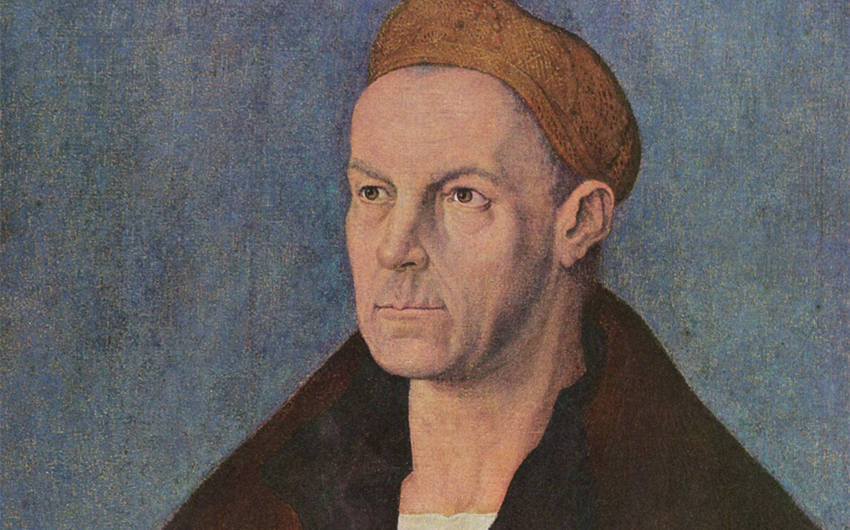
Jakob Fugger Net Worth: Who He Was, Estimated Fortune, and Wealth Breakdown
Jakob Fugger’s net worth is impossible to calculate with complete precision in modern dollars, but he is widely regarded as one of the richest people in history. Depending on the method used, historians and popular financial estimates have placed his fortune at a level that could equal hundreds of billions of dollars today. That makes him not just a rich merchant of his era, but a figure whose wealth may have rivaled or exceeded that of many modern billionaires when measured against the economy of his time.
Who Is Jakob Fugger?
Jakob Fugger, often called Jakob Fugger the Rich, was a German merchant, banker, and mining magnate who lived from 1459 to 1525. He came from the Fugger family of Augsburg, a powerful mercantile dynasty that grew into one of the most important financial houses in Europe during the late medieval and early modern periods. While the family was already successful before him, Jakob was the person who turned it into a financial force of historic scale.
He is best remembered for lending money to emperors, financing powerful rulers, controlling mining interests, and expanding the Fugger business into a multinational commercial empire. In practical terms, he was not just a wealthy businessman. He was one of the people helping shape the political and economic structure of Europe itself.
That is what makes his wealth so extraordinary. Jakob Fugger was not rich in the modern celebrity sense, or even just in the sense of owning a profitable company. He was rich in a way that gave him influence over dynasties, state power, trade, and the flow of money across entire regions.
Jakob Fugger Estimated Net Worth
Jakob Fugger’s estimated net worth is often described in modern terms as being somewhere in the range of hundreds of billions of dollars, though the exact number changes depending on how it is measured. Some popular historical comparisons place his fortune at the equivalent of roughly $300 billion to $400 billion or more in today’s money. Other methods compare his wealth to a share of the European economy, which can make the total appear even larger.
The reason the number varies so much is simple. There is no perfect way to convert early 16th-century wealth into modern dollars. You can compare raw inflation, share of gross domestic product, labor value, or political-economic power, and each method produces a different result. That is why articles about historical fortunes often disagree.
Still, the broad conclusion is very clear. Jakob Fugger was immensely wealthy even by the standards of the richest people in world history. Whether someone places him at $200 billion, $300 billion, or higher in modern equivalent terms, the larger point remains the same. He belonged in the very highest category of historical wealth.
Jakob Fugger Net Worth Breakdown
Banking was one of the main foundations of his fortune
One of the biggest reasons Jakob Fugger became so rich was banking. He was not simply a trader buying low and selling high. He built a financial system that allowed rulers and powerful institutions to borrow enormous sums. In an age when kings, emperors, and princes frequently needed money for war, politics, or succession struggles, the person who could lend that money held extraordinary power.
Fugger understood this better than most people of his time. By financing major political figures, he placed himself in the center of European power. That created profit, but it also created leverage. A banker to rulers is never just making money. He is helping decide who gets to rule and who can afford to keep ruling.
This is one reason his fortune grew so large. He was not playing at the edges of the economy. He was operating at its core.
Mining wealth made his empire even stronger
Another major source of Jakob Fugger’s fortune was mining. He gained control over highly profitable silver and copper mines, especially in Central Europe. These assets were not just valuable businesses. They were some of the most important hard-resource holdings in Europe at the time.
That matters because metals like silver and copper were central to the economy. They supported coinage, trade, manufacturing, and military power. A person who controlled those resources controlled more than a product. He controlled part of the machinery that made commerce and state finance possible.
Mining helped make Fugger’s wealth more stable than pure lending alone might have done. It gave him real productive assets, not just debts owed by powerful clients. That combination of finance and resource control is one of the main reasons his fortune reached such extraordinary levels.
Trade and international commerce expanded his reach
Jakob Fugger also built his wealth through trade. The Fugger family business had roots in textiles and merchant activity, and under Jakob that commercial base expanded into a much broader international enterprise. He operated across regions, dealt in high-value goods, and used networks that stretched far beyond a single city or kingdom.
This is important because trade gave him diversification. He was not dependent on only one business model. Banking made him powerful, mining made him richer, and trade connected the whole system. Together, these activities created a business empire rather than a single stream of income.
That kind of diversification is one reason his wealth lasted and expanded instead of collapsing under the risks of one sector alone.
Political influence increased the value of his money
Jakob Fugger’s fortune cannot be understood purely in business terms. His money had political power attached to it. He famously helped finance the election of Charles V as Holy Roman Emperor, which shows just how directly his wealth could influence the future of Europe.
This is one reason modern dollar comparisons never tell the whole story. Even if you attach a number like $300 billion to his name, that still does not fully capture what his money could do in his own time. His wealth was not just purchasing mansions or luxuries. It was influencing imperial succession, shifting alliances, and helping determine political outcomes.
In other words, Fugger’s money carried a level of strategic power that makes him seem even richer than a simple inflation-adjusted figure suggests.
His fortune was huge relative to the economy of his time
One of the strongest arguments for calling Jakob Fugger one of the richest people in history is not the raw dollar conversion, but the size of his fortune relative to the economy around him. In the early 1500s, Europe’s economy was far smaller than the global economy of today. That meant a massive private fortune represented a much larger share of total economic activity than it often does now.
This is why some historians prefer to compare historical fortunes by their share of national or continental output rather than by simple inflation. By that measure, Fugger becomes even more extraordinary. He was not just a rich individual inside a vast modern market. He was a man whose private wealth represented a significant concentration of economic power in a much smaller world.
That makes the case for his historic wealth even stronger.
Featured Image Source: https://en.wikipedia.org/wiki/Jakob_Fugger