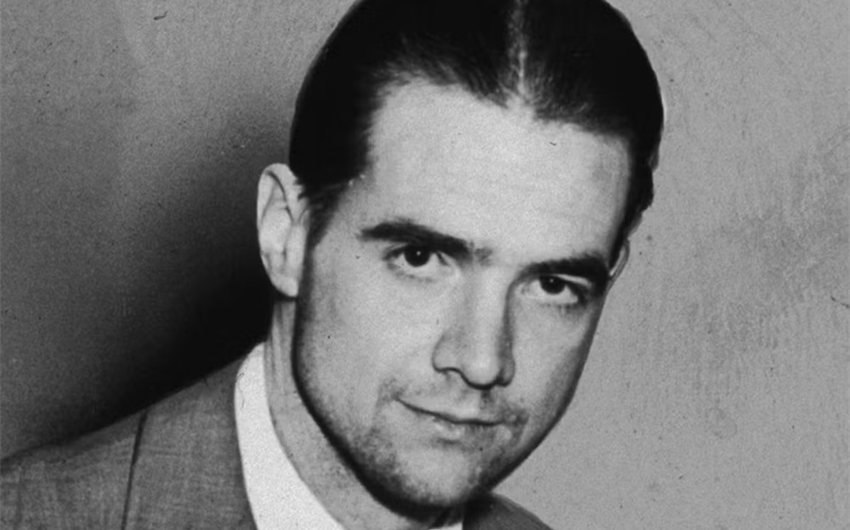
What Was Howard Hughes’ Net Worth and How Did He Build It?
Howard Hughes’ net worth at the time of his death is most commonly estimated at around $2.3 billion to $2.5 billion. In today’s money, that would be vastly higher. The exact figure is difficult to pin down because his estate became tangled in legal disputes after he died in 1976, but the broader picture is clear: Hughes was one of the richest men in America, and his fortune came from oil-tool manufacturing, aviation, movies, casinos, and real estate.
Who Was Howard Hughes?
Howard Hughes was an American businessman, aviator, film producer, inventor, and industrialist who became one of the most famous and eccentric wealthy men of the 20th century. He inherited control of Hughes Tool Company after his father’s death, and that company became the base of his fortune. From there, he expanded into Hollywood, aircraft manufacturing, aviation record-setting, and large-scale business ownership in Las Vegas.
What made Hughes different from many rich men of his era was that he did not build his identity in just one field. He moved across industries and managed to become important in several of them. He produced movies, founded and expanded aviation businesses, broke flight records, and built a business empire that included companies, planes, casinos, and major real estate holdings. That mix of industries is a big reason his fortune became so enormous.
He was also known for his extreme privacy and reclusive later life. By the time he died in 1976, his name was associated not just with wealth and business, but also with mystery, isolation, and one of the most complicated estates in American history.
Howard Hughes’ Estimated Net Worth
The most realistic public estimate for Howard Hughes’ net worth is that he was worth roughly $2.3 billion to $2.5 billion when he died in 1976. Because his assets were private, spread across many holdings, and tied up in probate fights, it is more honest to use a range than to pretend one exact number is beyond doubt.
This number sounds shocking for the 1970s, and it should. Adjusted into modern dollars, Hughes’ fortune would be worth many tens of billions. That is why he is often described as one of the richest Americans of his time. Even if the exact number moved slightly depending on how his assets were valued, there is no real doubt about the scale. He died with a fortune so large that it triggered one of the biggest estate battles of that era.
It is also important to understand that this estimate reflects wealth near the end of his life, not necessarily the peak of every business he controlled. Like many private fortunes, Hughes’ net worth was tied to holdings whose value could shift depending on ownership structure, debt, legal claims, and the way assets were counted after his death.
Breakdown of Howard Hughes’ Wealth
Hughes Tool Company Created the Original Fortune
The first and most important foundation of Howard Hughes’ wealth was Hughes Tool Company. His father invented a rotary drill bit for oil drilling, and the company’s patent position made the family extremely wealthy. After taking control of the business while still very young, Hughes used that industrial base as the platform for everything else that followed.
This matters because Hughes did not begin as a self-made movie producer or aviator with no financial backing. He started with real capital, and that capital gave him room to take much bigger risks than most people could. It funded experiments, purchases, business moves, and expansion into entirely different industries. Without Hughes Tool Company, the rest of the empire would almost certainly have been much smaller.
In many ways, this was the engine that made all the later adventures possible. It gave him financial independence early, and that allowed him to operate on a scale few people of his generation could match.
Hollywood Added Fame and More Wealth
Another major part of Howard Hughes’ fortune came from motion pictures. He became a producer and director in Hollywood and built a reputation through ambitious film projects. His movies made him famous, but they also helped expand his influence beyond oil wealth and industry.
This mattered financially because Hollywood gave him another source of income and another class of assets. He was not simply spending inherited money on glamorous projects. He was building visibility, owning productions, and extending his reach into one of the most powerful cultural industries in America.
Film also helped shape the larger Hughes myth. He was no longer just an heir with money. He became a public figure connected to spectacle, risk, and larger-than-life ambition. That public image likely increased his influence in other parts of business as well.
Hughes Aircraft Became a Major Wealth Engine
One of the most important reasons Howard Hughes became so rich was Hughes Aircraft. His work in aviation was not just about personal fascination or flying records. It became a serious industrial and technological enterprise that added another major layer to his fortune.
This is a key point in understanding his wealth. Hughes was not simply an eccentric pilot with a lot of money. He turned aviation into business, and that business became one of the strongest pillars of his empire. A major company tied to aircraft and aerospace work created a completely different scale of wealth than a personal hobby ever could.
That also helps explain why Hughes remained financially important beyond Hollywood. Even if his film career had never existed, his position in aviation and industrial enterprise would still have made him an extraordinarily wealthy man.
Aviation Fame Strengthened His Public and Business Power
Hughes became famous for setting speed and distance records in aviation, and those achievements mattered in more ways than simple publicity. His flying helped reinforce the image of Hughes as a man of innovation, technical daring, and American ambition.
This mattered because public image often increases business power. A wealthy man who is also seen as a visionary, inventor, and risk-taker tends to attract more attention than an ordinary industrial heir. Hughes’ aviation achievements made him seem larger than life, and that image likely strengthened the overall value of his name and enterprises.
In practical terms, the records did not directly create all of his wealth, but they helped increase the stature that surrounded everything he touched. That kind of stature can be very powerful when someone is already operating across multiple industries.
Las Vegas Casinos and Real Estate Expanded the Empire
By the time of his death, Hughes’ empire included major Las Vegas casinos, real estate, aircraft, and other large holdings. This shows how far his fortune had expanded beyond its original industrial roots. He was no longer simply an oil heir, movie producer, or aviation businessman. He had become a broad-based empire builder.
This matters because casinos and real estate often become major wealth multipliers. They turn capital into recurring business value, land control, and long-term asset appreciation. In Hughes’ case, these holdings were part of what made his estate so difficult to untangle after he died. There was simply so much of it, and it was spread across too many different areas.
That diversity is one reason his fortune reached such a vast size. He was not depending on one company or one industry. He was spreading wealth across businesses that could keep generating value in different ways.
Featured Image Source: https://www.biography.com/business-leaders/howard-hughes