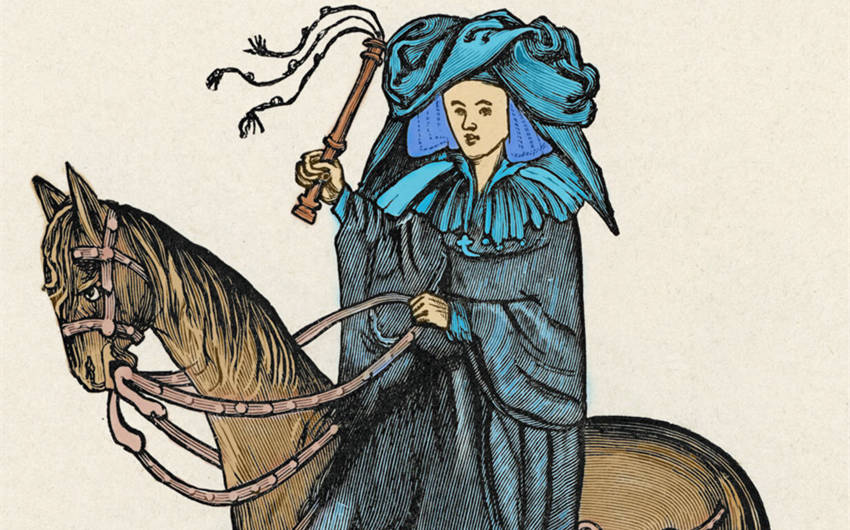
The Wife of Bath’s Tale Summary, Themes, Characters, and Deeper Meaning Explained
The Wife of Bath’s Tale is one of the most discussed stories in Geoffrey Chaucer’s The Canterbury Tales, and for good reason. It is a lively, strange, and surprisingly sharp tale about power, marriage, desire, and what women truly want. On the surface, it reads like a medieval romance with a knight, a queen, and an old woman who changes everything. But underneath, it is really a story about authority, gender, and the struggle for control in relationships.
What Is The Wife of Bath’s Tale About?
The Wife of Bath’s Tale tells the story of a knight in the court of King Arthur who commits a serious crime against a woman. As punishment, he is sentenced to death, but the queen and her ladies intervene and offer him one chance to save his life. He must discover the answer to one question: what do women most desire?
The knight travels for a year trying to find the answer. He hears many different responses, but none seem fully reliable. Near the end of his search, he meets an old woman who promises to give him the correct answer if he agrees to grant her request later. Desperate to live, he accepts.
When he returns to court, he answers that women most desire sovereignty over their husbands and lovers, meaning authority and control in their own lives and relationships. The women of the court agree that he is right, so his life is spared.
Then the old woman steps forward and demands her reward: she wants to marry him. The knight is horrified, but he has no choice. After the wedding, he is miserable because he finds her old, poor, and unattractive. The old woman then challenges him, asking whether he would rather have a wife who is old and faithful or young and possibly unfaithful.
At that moment, the knight finally gives the decision to her. He allows her to choose for herself. Because he gives her sovereignty, she rewards him by becoming both beautiful and faithful, and the tale ends with harmony in the marriage.
A Short Summary of the Plot
The plot of The Wife of Bath’s Tale moves quickly, but its ideas are layered. A knight commits a violent act and is forced into a moral lesson. To survive, he must learn something about women that he clearly did not understand before. His journey is not just physical. It is also a test of character.
At first, he treats women as objects and sees marriage as a burden. By the end, he learns to surrender control. That change is the heart of the story. The tale is not simply about guessing the right answer to a riddle. It is about transformation through humility.
The ending may feel magical, but the magic supports the moral point. The knight receives happiness only after he gives up the desire to dominate. In that sense, the story works like a lesson disguised as a romance.
The Main Theme: What Women Most Desire
The most famous idea in The Wife of Bath’s Tale is the answer to the central question: women most desire sovereignty. In simple terms, they want control over their own lives, especially in marriage. That answer drives the entire tale and connects directly to the Wife of Bath herself, who is one of the boldest and most outspoken characters in all of medieval literature.
This theme matters because it pushes against the social expectations of Chaucer’s time. Medieval society was overwhelmingly male-dominated, and women were expected to obey husbands, fathers, and religious authority. Yet this tale argues that a good relationship depends on giving women power rather than taking it away.
That is what makes the story feel surprisingly modern. It may come from the fourteenth century, but its central question still feels alive. Who gets to decide? Who holds power? What happens when one person in a relationship refuses to listen to the other? These are not old questions at all.
Marriage and Power in the Tale
Marriage is not presented in The Wife of Bath’s Tale as a soft or sentimental institution. It is presented as a struggle over power. The knight does not begin as a loving husband. He sees the marriage as punishment because he judges the old woman by status, wealth, and appearance. He wants a wife who pleases him, not a partner with her own will.
The tale slowly overturns that attitude. The old woman is the most powerful figure in the story, even though she appears powerless by social standards. She is old, poor, and physically unattractive by conventional expectations. Yet she is the one who understands the truth. She controls the knight’s fate, she frames the moral argument, and she creates the final transformation.
This reversal is one of the tale’s smartest moves. Chaucer takes a character who would normally be dismissed and gives her the deepest wisdom. That forces both the knight and the audience to confront their own assumptions.
The Role of the Old Woman
The old woman is more than a plot device. She is the moral center of the tale. At first, she seems like a typical folktale figure, the strange woman who appears at the edge of the hero’s journey and offers hidden knowledge. But she becomes much more than that.
She speaks with intelligence, confidence, and authority. She does not merely help the knight survive. She teaches him. Her long speech after their marriage is one of the most important parts of the story because it challenges shallow ideas about beauty, nobility, poverty, and value.
She argues that true nobility comes from virtue, not bloodline. She questions the knight’s disgust and exposes how foolish his values are. In doing so, she becomes not just a magical figure but a voice of social criticism. She represents wisdom that the proud and privileged often fail to recognize.
The Importance of Transformation
Transformation happens on two levels in the tale. The obvious transformation is physical: the old woman becomes young and beautiful at the end. But the more important transformation is the knight’s inner change.
At the beginning, he is violent, arrogant, and entitled. By the end, he finally yields authority to someone else. He learns that happiness cannot come through domination. It can only come through mutual respect.
This is why the ending matters. The old woman does not become beautiful until the knight gives her the power to choose. Her transformation symbolizes the reward that comes when control is replaced by trust. The magic is not random. It reflects the moral logic of the tale.
The Wife of Bath and Her Tale
It is impossible to fully understand The Wife of Bath’s Tale without thinking about the Wife of Bath herself. She is not just the storyteller. She shapes how the tale should be read. In her prologue, she talks openly about marriage, sexuality, power, and experience. She challenges male authority and insists that her own lived experience matters.
That makes her tale feel personal. The story does not sound like a neutral moral lesson. It sounds like a woman making an argument about how marriage works and how men misunderstand women. The tale becomes an extension of her worldview.
This connection gives the story much of its force. The Wife of Bath is funny, provocative, and sometimes contradictory, but she is never weak. Her tale reflects her belief that women should have mastery in relationships, and that belief is what the knight must learn before he can find peace.
Symbolism and Deeper Meaning
Several elements in The Wife of Bath’s Tale work symbolically. The knight represents male privilege and careless power. His crime is not only personal wrongdoing. It stands for a larger pattern of male control. The queen’s court, by contrast, becomes a space where female judgment replaces male authority.
The old woman symbolizes hidden wisdom. She also represents the idea that truth does not always appear in the form society values most. Her age, poverty, and appearance make her easy to underestimate, but she is the one who sees clearly.
The question itself, what women most desire, is symbolic too. It forces the knight to stop thinking only about what he wants. For perhaps the first time, he must listen. That movement from selfishness to understanding is the tale’s deepest moral change.
Why The Wife of Bath’s Tale Still Matters
One reason The Wife of Bath’s Tale remains so widely read is that it still feels relevant. Its language and setting are medieval, but its concerns are not trapped in the past. The tale asks what fairness in relationships looks like. It questions the connection between power and love. It challenges the idea that beauty and status are the most important qualities in a person.
It also remains important because it gives a strong voice to a female perspective in a literary tradition often dominated by male authority. The Wife of Bath may be fictional, but she remains one of the most memorable and forceful voices in English literature. Her tale keeps inviting readers to think about gender, control, and respect in ways that still feel fresh.
The Real Meaning of The Wife of Bath’s Tale
At its core, The Wife of Bath’s Tale is about power given and power taken away. It argues that women desire sovereignty, not because they want domination for its own sake, but because they want dignity, choice, and recognition. The knight only finds peace when he stops trying to control everything.
That is the lasting lesson of the story. Love without respect becomes coercion. Marriage without equality becomes misery. But when the knight finally yields authority and accepts the old woman’s right to choose, the story moves from punishment to harmony.
So, what is The Wife of Bath’s Tale really about? It is about much more than a knight and an old woman. It is about marriage, authority, gender, and the human need to be heard. That is why it remains one of the richest and most memorable tales Chaucer ever wrote.
Featured Image Source: https://www.nytimes.com/2023/02/09/books/review/the-wife-of-bath-marion-turner.html